

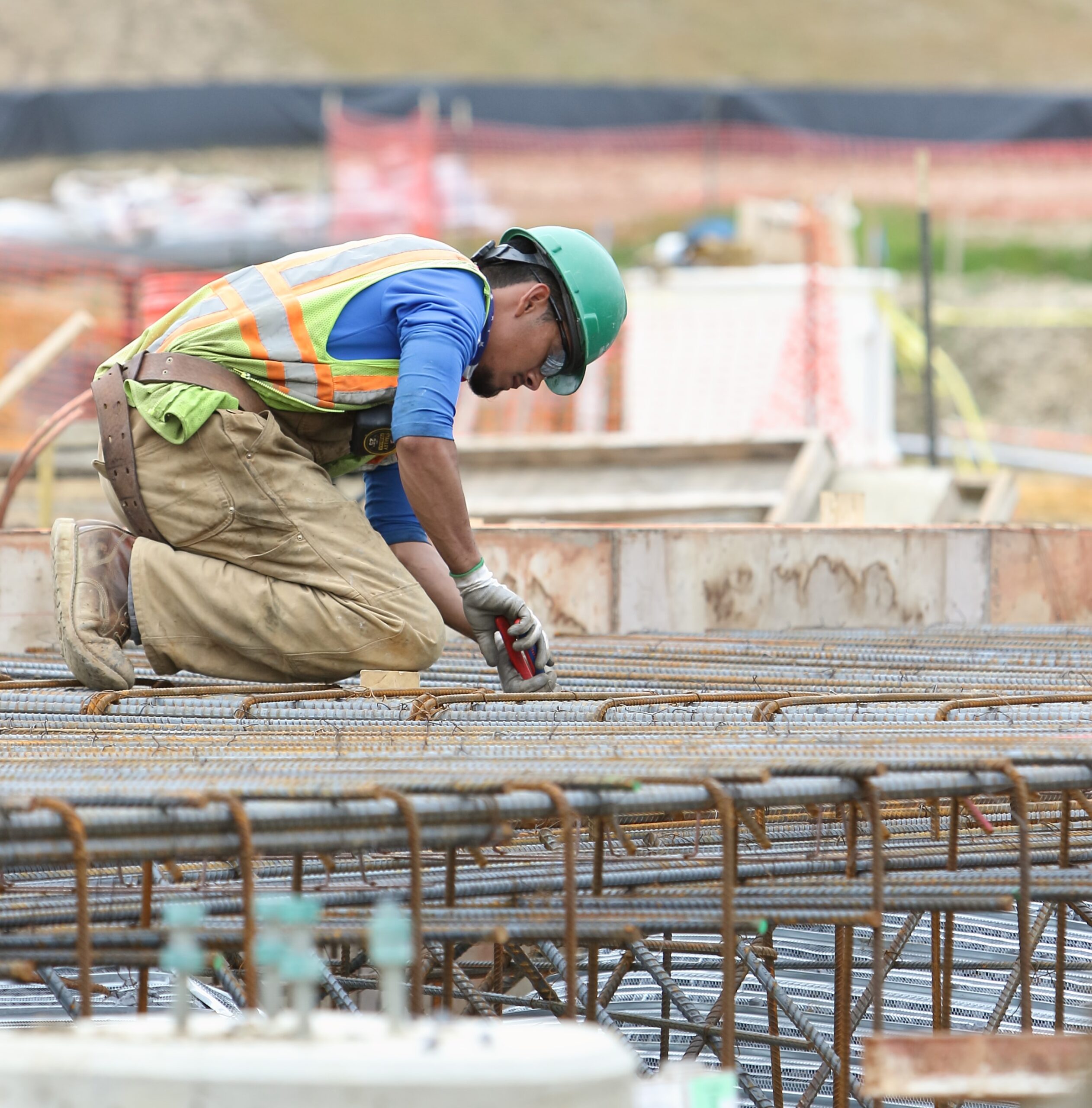
Volatility and momentum collide as contractors chart their course through 2026.
BY AMY KING
The construction industry is expected to enter 2026 facing uneven demand, rapid technological change, and persistent workforce shortages. From economic uncertainty to accelerating AI adoption and evolving federal policy, contractors must navigate a year of both challenges and opportunities.
Economic Outlook
When it comes to the economy, 2026 is expected to be highly uneven for the construction industry, according to Ken Simonson, AGC of America’s chief economist. Markets tied to data centers and electric power are expected to remain exceptionally strong, with spending potentially surpassing 2025 levels. Airport construction should also continue steady growth, and niche areas likes specialty care medical facilities, and last-mile distribution centers show promising momentum. Outside of these categories, most sectors are likely to see flat or negative demand through the year. Simonson predicts that public construction, which held up better than private in 2025, is expected to cool in 2026 as state and local budgets tighten. Private construction may rebound slightly.
Policy uncertainty remains one of the industry’s biggest headwinds as tariffs continue to disrupt the economy. Simonson expects material costs to rise 2-4%, with tariff-affected items increasing more. Contractors can mitigate some of these risks by pre-ordering materials or securing tariff-related price adjustment clauses.
“There’s a lot of risk surrounding abrupt changes from this administration’s policies that has caused owners to hold off on projects,” said Simonson. “That was a problem throughout 2025 and could intensify in 2026.”
Immigration enforcement also adds risk because of jobsite disruptions and workforce shortages from stagnant U.S. population growth. Rising federal deficits may further increase long-term interest rates, pushing up borrowing costs. While recent corporate tax clarity and enhanced write-offs are positives, they cannot drive construction without strong demand. Conversely, stronger global growth and AI-driven business investment could provide an unexpected upside.
New Tools of the Trade: AI and Tech
The industry is poised to enter a pivotal phase defined by the pressures of labor shortages and the accelerating adoption of digital tools built to ease that strain. Strong pipelines for data centers, AI-driven infrastructure, and onshore manufacturing are encouraging indicators of what lies ahead, but they are also more complex. Contractors are increasingly turning to software to keep operations on track.
AI is becoming essential because contractors do not have enough workers to keep up with document-heavy workflows. By summarizing submittals, RFIs, change orders, and safety logs, AI can flag issues quickly so firms can prioritize highervalue work.
“AI has the ability to elevate mid-size contractors to do more business,” said Sarah Gallegos, senior director of building division and construction innovation for AGC.
“I foresee a revenue gap widening for middle contractors who are able to make the leap versus smaller contractors who are hesitant to adopt and will get left behind.”
Contractors hesitant to dive in can still benefit as more vendors continue integrating AI into their platforms and systems. However, fragmented adoption may become a growing challenge.
“I worry that because AI is such a buzzword, firms are going to spread their data across too many tools.” said Chris Love, AGC’s chief information officer. “While they might have created some efficiencies in the process, they’ve now split their data up over three or four different systems. Firms need to be careful and look for tools that can either handle multiple systems or integrate their data.”
Trimble, an AGC Capstone Supporter, recently developed Trimble Marketplace to give customers a digital storefront that integrates and extends their software to fill workflow gaps.
“Contractors have been asking for technology that can help them navigate the unique and complex paradigm of their projects,” said Lawrence Smith, vice president and general manager of Construction Management Solutions at Trimble. “That is why we are focused on solutions that can keep information standardized, so it is portable and insightful.”
As AI shifts from hype to practical application construction firms can utilize it to streamline tasks and close gaps between the office and field. Project management platforms are among the fastest-growing categories because they offer better operational control and real-time visibility of jobsite conditions. Contractors are eager for tools that automate repetitive administrative tasks.
The rise in AI popularity will undoubtedly lead to federal regulations for cybersecurity and AI, according to Love. To support members through this transition, AGC has released AI guides, expanded its training courses and is developing a vendor marketplace for contractors to find vetted technology partners. AGC also created Innovation Labs to help firms experience emerging tools in practice. The labs are hands-on spaces that include robotics, BIM overlays, and advanced jobsite technologies.
Looking ahead, Smith expects AI to advance from task automation toward predictive insights as contractors consolidate data streams and leverage historical information. That evolution is lowering barriers to tech adoption across the industry.
“The only way for construction to become more efficient and more attractive to the workforce is through technology,” Smith said. “Contractors know this, and adoption is accelerating out of necessity.”
Workforce and Educational Programming
The industry’s primary challenge heading into 2026 remains the workforce shortage. Contractors need skilled workers at every level, from craft professionals to leaders. Many companies will need to develop talent internally to offset the shortage.
“Workers are more likely to stay with a company that helps them grow and develop,” said Meredith Woods, senior director of education and credentialing for AGC of America. “I think people are realizing from the last downturn that this has to be a focus. You can’t take your eyes off the ball. The workers are not out there. You have to develop them yourself.”
To support this need, AGC is rapidly expanding its live, virtual training program, AGC EDGE, so workers can learn remotely. Courses include short-format workshops on topics like AI in estimating, blueprint reading, and technical skills. AGC is also leaning into credentialing, with new certificate programs, digital badges, and access to Spanish-language offerings. Conversely, AGC also formed a partnership with Freestyle Languages to offer English-speaking workers the opportunity to learn jobsite-specific Spanish.
Legislative Landscape
At the federal level, AGC’s top legislative focus is the pending reauthorization of the Infrastructure Investment and Jobs Act, which expires in September 2026 and will require Congress to revisit core highway and transit programs. AGC is also tracking reauthorizations of the Water Resources Development Act and the National Defense Authorization Act, two bills that deliver billions in construction funding.
The recent passage of the One Big Beautiful Bill carries several major tax provisions with direct implications for the construction industry, particularly firms structured as family-owned or pass-through businesses. The bill raises the estate-tax threshold to inflation and extends the Qualified Business Income deduction, preventing a 20% tax increase for pass-through construction firms in 2026. Finally, it restores full expensing for new and used construction equipment, so contractors can deduct the entire cost in the year of purchase rather than depreciating over time.
“I think the biggest change is that we went from a regulatory onslaught under the Biden administration to a period of deregulation,” said Alex Etchen, vice president of government relations, AGC of America. “Although, we now have an administration that scrutinizes every dollar of federal spending, forcing us to educate them on the benefits of federal investments.”
AGC is pressing lawmakers to reduce permitting delays, a concern outlined in AGC’s letter to the administration. Etchen says early improvements are emerging. AGC continues to meet on Capitol Hill and host jobsite tours for lawmakers, while offering resources like a new Tariff Resource Center to help contractors stay informed.
Risk, Regulation and Readiness
From a risk-management perspective, contractors are navigating a more complex risk environment. Some of the top regulatory concerns in 2026 are PFAS rules and OSHA’s Heat Injury and Illness Prevention in Outdoor and Indoor Work Settings rule. Ensuring deregulatory efforts have a net benefit is a big concern as well, yet not all deregulation results in cost savings. OSHA’s proposal to rescind construction illumination requirements is an example of that.
“Contractors who proactively plan, strengthen their contracts, and adopt disciplined risk controls will be best positioned to navigate the uncertainty,” said Leah Pilconis, general counsel, AGC of America. “A strong best practice is for contractors to have more intentional risk management on the front end.”
In addition to the PFAS, heat and illumination rules, Pilconis encourages members to stay informed of other rules making waves in 2026. The first is a proposed rule that would clarify the definition of the Waters of the United States. Second, is a final rule that determines employee or independent contractor classification under the Fair Labor Standards Act. Third, is an interim final rule revising the Disadvantaged Business Enterprise program. Finally, the proposed rule Normalizing Unmanned Aircraft Systems Beyond Visual Line of Sight Operations would allow contractors to expand their drone programs to use autonomous drone technology.
The year ahead may test the industry, but it also offers a critical opportunity for modernization and long-term growth. Contractors that invest in their people, strengthen risk practices, and embrace integrated technologies will be best positioned to thrive in 2026.